

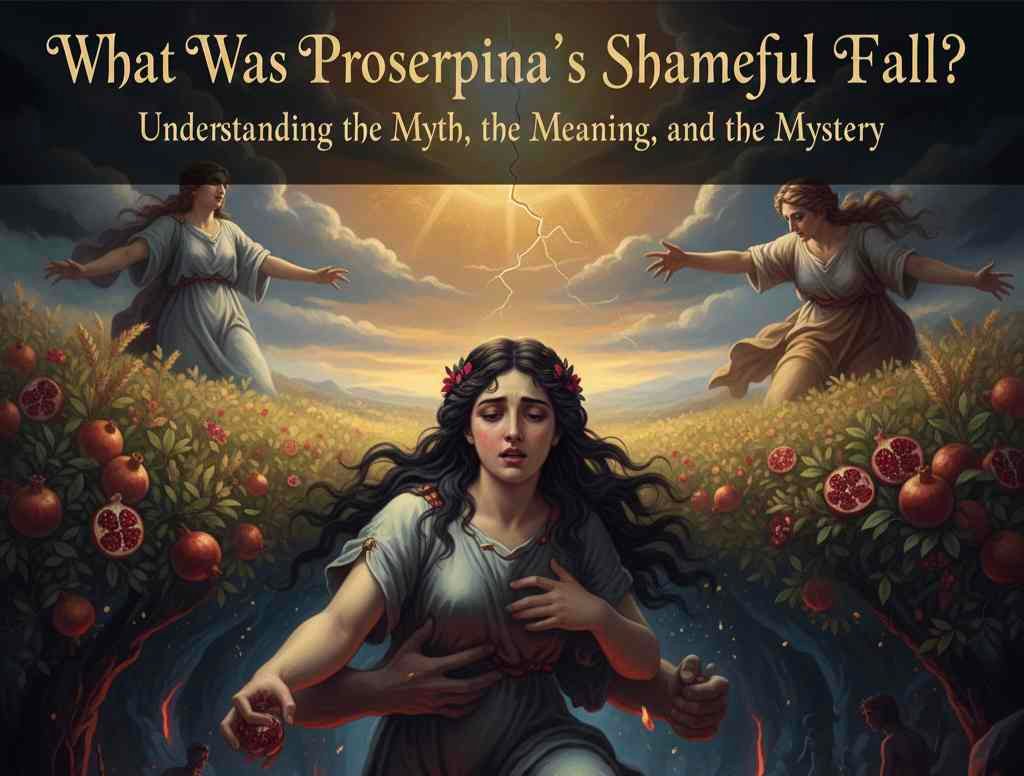
Mythology often hides deep lessons beneath dramatic stories, and one of the most intriguing questions from Roman myth is: what was proserpina’s shameful fall? This ancient tale has been retold for centuries, blending themes of innocence, power, transformation, and the delicate cycles of nature. Yet the phrase itself—passing quietly from scholar to reader—continues to inspire curiosity. What made this “fall” so shameful? Why did it matter so deeply to ancient cultures, and why does it still resonate today?
To answer these questions, we must explore both the poetic symbolism and the emotional weight behind Proserpina’s story. After all, myths endure not simply because they are old, but because they speak to human experience in timeless ways.
The Story Behind the Phrase
To uncover what was proserpina’s shameful fall, we start with the well-known myth. Proserpina (the Roman counterpart of Persephone) was the daughter of Ceres, the goddess of the harvest. Her beauty was celebrated across the divine world, and one day, while gathering flowers in a meadow, she caught the eye of Pluto—god of the Underworld. Captivated, he swept her away into his realm beneath the earth.
To the Romans, this moment represented a dramatic “fall” from childhood innocence to a darker, more adult destiny. It wasn’t merely a physical descent into the underworld—it was a metaphorical fall into a new and complicated stage of existence.
Why Was the Fall Considered Shameful?
The phrase can feel puzzling at first, so exploring what was proserpina’s shameful fall requires a look at ancient cultural values. In Roman society, a young woman’s purity and freedom were treasured. Proserpina’s sudden abduction symbolized a loss of innocence, agency, and safety. To the people of the time, this was deeply shameful—not for Proserpina herself, but because such a violation represented a disruption of natural order and maternal protection.
Her mother, Ceres, was devastated. As the goddess of agriculture, her grief caused the earth to wither. Crops failed. Fields turned barren. The world entered a symbolic winter. In this sense, Proserpina’s “fall” also meant a fall for humanity—a reminder of how even divine turmoil could ripple into everyday life.
The Emotional Layer Behind the Myth
When people ask what was proserpina’s shameful fall, they’re really asking: What does this story emotionally represent? At its heart, the myth is about change—unwanted change. It echoes universal human experiences:
- The loss of childhood
- The pangs of separation between parent and child
- The fear of losing control over one’s path
- The necessity of adapting to a new identity
These themes make the myth endlessly relatable. We’ve all had moments where life pulls us somewhere we never expected. We’ve all felt that sudden shift from light to dark—sometimes literally, sometimes emotionally.
A Cycle of Descent and Return
Importantly, Proserpina’s fall was not the end of her story. Ceres demanded her daughter’s return, and after much divine negotiation, a compromise was formed: Proserpina would spend part of the year above ground bringing warmth, life, and springtime; the rest of the year, she would return to the Underworld.
This cycle of descent and return reflects the seasons, but it also mirrors the human journey. Every “fall” in life has a corresponding rise. Every winter carries the seed of spring.
Thus, what was proserpina’s shameful fall becomes not only a question of mythology but a reflection on endurance, transformation, and renewal.
Modern Meaning: Why the Phrase Still Matters
Today, Proserpina’s story is interpreted through many lenses—psychological, literary, feminist, and symbolic. The idea of a “shameful fall” continues to resonate because:
- It addresses the loss of control over one’s fate.
- It reflects the complexity of womanhood and coming-of-age.
- It symbolizes cycles of trauma and healing.
- It reveals how darkness and growth often coexist.
Modern readers don’t view Proserpina herself as shameful. Instead, the shame lies in the injustice of her abduction and the overwhelming consequences that followed.
A Human Reflection on the Myth
When exploring what was proserpina’s shameful fall, it helps to think of your own life. Many of us have faced unexpected moments—situations that pulled us away from what felt safe, bright, or familiar. Like Proserpina, we’ve had times where we didn’t get to choose the path, but we still found a way to grow within it.
Her story isn’t just a myth; it’s a reminder that falling doesn’t define us. Rising does.
Conclusion
So, what was proserpina’s shameful fall? It was her forced descent from innocence into the underworld—an event steeped in symbolism, sorrow, and transformation. It represented the loss of her old identity and the beginning of a new, more complex existence. But perhaps the most powerful truth of the myth is that even a fall—no matter how dark, painful, or involuntary—can lead to rebirth.
Proserpina’s journey reminds us that life’s winters do not last forever. Beneath every cold season, spring quietly prepares its return.